Reel Mower vs. Rotary Mower: Who Needs a Reel and How Low to Mow
By the TurfTrigger team · Reviewed against university-extension sources · Last reviewed July 16, 2026 · Our timing models
Every lawn obsessive eventually stares at a golf fairway and asks the question: why does that grass look like that, and mine looks like mine? A surprising amount of the answer is not the grass, the water, or the budget. It is the machine doing the cutting. Fairways are cut with reels. Yards are cut with rotaries. Below a certain height, that difference is everything.
Reel versus rotary
A rotary mower uses a fast horizontal blade and is the practical choice for most home lawns. A sharp rotary can cut cleanly around 1 to 1.5 inches if the machine can be set that low and the lawn is smooth. It forgives bumps and handles weeds, leaves, and neglect. Every standard mower is a rotary.
A reel mower traps each blade of grass between a spinning helix and a fixed bedknife and slices it: scissors. A sharp, properly adjusted reel produces excellent cut quality at low heights and can maintain turf around an inch, half an inch, or fairway height. A sharp rotary can also cut cleanly, but most rotary decks become difficult to use evenly near or below 1 inch. At about 1 inch and below, a properly adjusted reel becomes the reliable tool for an even cut.
Blade condition matters more than mower type. Dull or poorly adjusted equipment leaves ragged tips that brown, lose more water, and create larger infection sites. A sharp rotary cuts cleanly, while a dull or misadjusted reel can tear grass too. But the real reason reels exist is height, which brings us to the only question that matters.
The height decides the machine
Every grass has a height band it is happy in, and the bands sort cleanly into rotary territory and reel territory:
| Grass | Typical mow band | Machine |
|---|---|---|
| Bermuda | 0.5 to 1.5 in spring/fall, 1 to 2 in summer | Reel near 1 in and below; rotary works toward the upper end |
| Zoysia | 1 to 2 in spring/fall, 1.5 to 2.5 in summer | Reel near 1 in; rotary works toward the upper end |
| Perennial ryegrass | 2 to 2.5 in | Rotary |
| Kentucky bluegrass | 2 to 3 in | Rotary |
| Tall fescue | 3 in and up | Rotary, always |
| St. Augustine | 2.5 to 3.5 in | Rotary, always: do not push it below its recommended band |
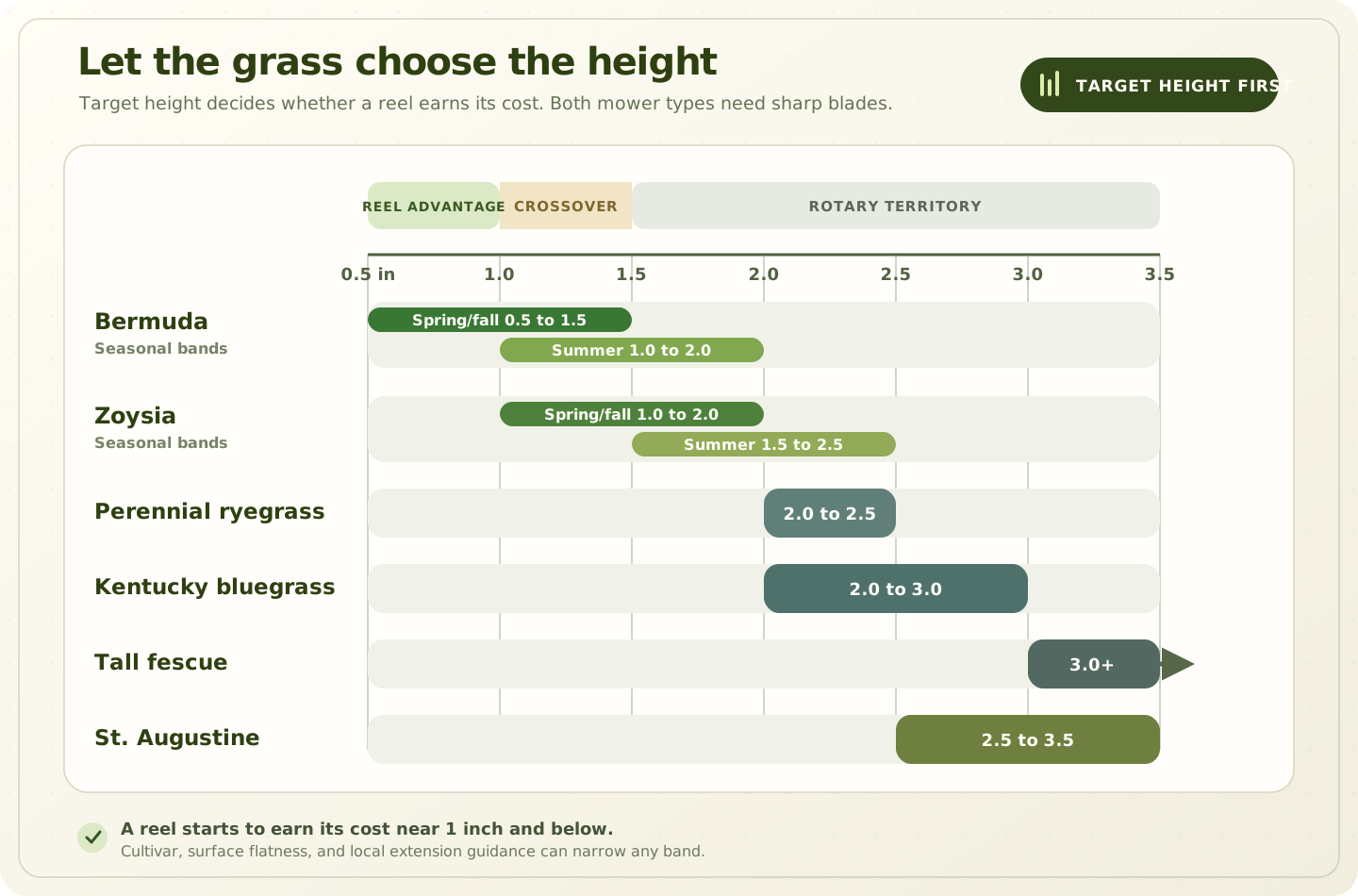
These are TurfTrigger's planning bands. Cultivar and local extension guidance can narrow them, especially for zoysia and St. Augustine. Standard St. Augustine cultivars in Florida are commonly maintained toward or above the upper end, while dwarf cultivars can tolerate a lower cut.
For typical home lawns, reel mowing is mainly a low-cut bermuda or zoysia choice. Cool-season sports turf can also be reel-mowed low, but that is a different management system from an ordinary home lawn. Bermuda and many zoysia cultivars tolerate low, frequent mowing because they spread laterally. A three-quarter-inch bermuda lawn can become dense and uniform, but only with a level surface, frequent mowing, and adequate water and nutrition. The lower cut still reduces the lawn's margin for error.
Cool-season grasses and St. Augustine run the other way: their bands sit at heights where a rotary already cuts fine. Repeatedly cutting tall fescue near one inch weakens the turf, reduces rooting, and increases heat, drought, disease, and weed pressure.
So the honest gate is simple: if your target is above about 1 to 1.5 inches, a sharp rotary is usually the better buy. If you grow bermuda or a reel-suited zoysia and genuinely intend to maintain it around 1 inch or lower, a reel starts to earn its cost.
What low-cut life actually demands
Going low is a program, not a purchase. Three things change:
Frequency goes up. The one-third rule (never remove more than a third of the blade) is unforgiving at low heights: a lawn at one inch violates it at an inch and a half. At sub-inch heights during peak growth, expect to mow every two to four days, or whenever the canopy reaches about one and a half times the target height. At higher reel settings or during slower growth, the interval can be longer. Warm-season turf loves the tight, frequent cut; your calendar has to love it too. (A PGR program pairs naturally with reel mowing precisely because it buys the cadence back.)
Flatness starts to matter. At three inches a rotary floats over bumps. At three-quarters of an inch, every bump is a scalp mark: the reel shaves the high spots bare. This is why reel mowing and sand leveling travel together: the surface has to be true for the cut to be even. Expect the first season of reel mowing to reveal every imperfection your rotary was hiding, and plan a leveling pass or two.
The first spring cut is species-specific. For bermuda, removing dormant leaf tissue slightly below the regular summer height just before or as green-up begins can help reset the canopy, but do not cut into crowns or soil. For zoysia, be more conservative: mow slightly lower than normal and stop short of scalping, because aggressive spring scalping can injure zoysia and slow recovery.
Buying: powered vs. push
- Push reels (the quiet spiral machines) are cheap, silent, and honest for small, flat, already-low lawns. Push reels work best on smooth lawns maintained between about 0.75 and 2 inches. Once the turf grows beyond the mower's effective range, it tends to bend instead of cutting cleanly. After a missed interval, use a rotary or lower the height in stages rather than forcing one heavy reel cut.
- Powered reels (greens-style walk-behinds, new or ex-golf-course) are the real tool for a serious bermuda/zoysia program: heavy, fast, and capable of true sub-inch cutting. The used golf market is where most enthusiasts land.
- Either way, the bedknife-to-reel contact needs periodic adjustment and sharpening (backlapping). A dull or poorly adjusted reel tears grass instead of shearing it cleanly.
FAQ
Will a reel mower make my lawn look like a fairway by itself?▸
It removes the ceiling. The look comes from the package: right grass, low height, high frequency, level surface, and a feeding program. The reel is the enabling tool, not the whole trick.
Can I reel mow tall fescue or St. Augustine at their normal height?▸
Mechanically, high-cut reels exist, but you gain little: at 3 inches a sharp rotary cut is already clean, and those grasses hate the low heights where reels shine. Spend the money on leveling or a PGR instead.
How does TurfTrigger fit in?▸
The engine already speaks this language: your mow height guidance is per-grass (the same bands in the table above), the first-mow alert for bermuda and zoysia flags when the low end of the band needs a reel, the spring scalp window is timed off soil temperature for your zone, and the sand-leveling alert times the surface work a reel program depends on. TurfTrigger does not currently model whether you own or use a reel mower.
Sources
- Oregon State Extension, Practical Lawn Care for Western Oregon (one-third rule, rotary limits near 1 inch, push-reel range of roughly 0.75 to 2 inches, problems on uneven ground)
- Kansas State University, Mowing (sharpness as the key to cut quality, both mower types can produce acceptable results, short-turf advantage of reels)
- Texas A&M AgriLife, Mowing Recommendations for Warm-Season Turfgrasses (warm-season mowing ranges, reel minimum heights, increased frequency at low heights, cultivar-specific decisions)
- UF/IFAS Extension, Mowing Your Florida Lawn (mower selection and mowing-height ranges for bermuda, zoysia, and St. Augustinegrass)
- UC Statewide IPM, Reel Mowers (reel use on smooth, low-cut turf; several cool-season grasses can also be reel-mowed)
- NC State Extension, Bermudagrass Lawn Maintenance Calendar (reel and level surface below about 1 inch, frequent mowing, species-specific spring mowing)
- UF/IFAS Extension, Zoysiagrass for Florida Lawns (cultivar-dependent zoysia heights; spring scalping can injure the lawn)
- Texas A&M AgriLife, St. Augustinegrass Lawn Management (higher mowing, cultivar and site considerations, deeper rooting, shade accommodation, avoidance of scalping)
See where this lands in your season
Timing beats technique. See the month this task belongs in for your grass on the free grass-and-zone schedules, or enter your ZIP for your soil temperature today and whether the pre-emergent window is open.